Layout & Design

Connecting Vector Sets to the Framer CMS (Vectors Lesson 6)

Connecting Vector Sets to the Framer CMS (Vectors Lesson 6)

Connecting Vector Sets to the Framer CMS (Vectors Lesson 6)

Justin

·

3:38

·

1.6K views

·

About this lesson

Learn how to make Vector Sets dynamic by connecting them to the CMS in Framer. In this lesson, we’ll cover how to add Vector Sets to a CMS collection, link them to CMS pages using variables, and swap them automatically inside CMS-driven layouts.

00:00 Introduction

00:30 Getting Started with the Framer CMS

00:46 Adding Vector Sets to the CMS

01:28 Linking Vector Sets to a CMS Page using Variables

02:42 Additional CMS Fields

03:14 Wrap Up

Check out the full course here: https://www.framer.com/academy/courses/mastering-vectors-in-framer

Sign up: https://framer.link/yt

Follow: https://framer.link/yt-x

Learn: https://framer.link/yt-academy

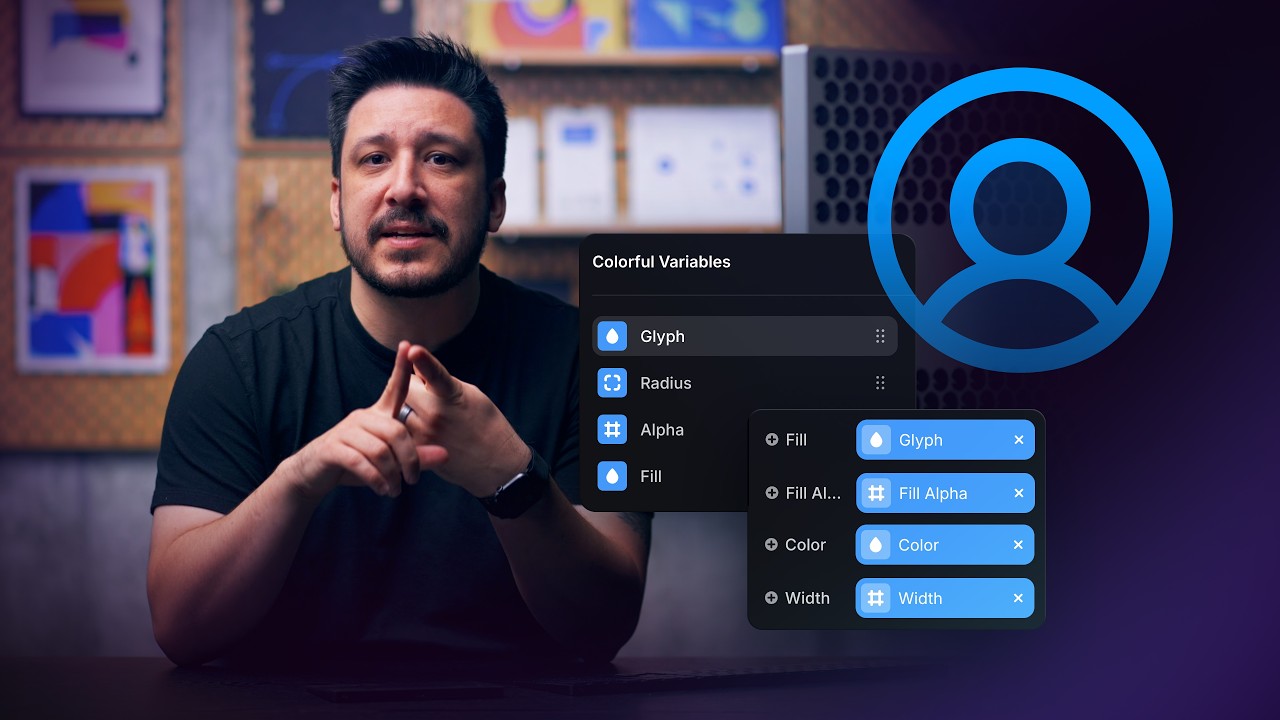
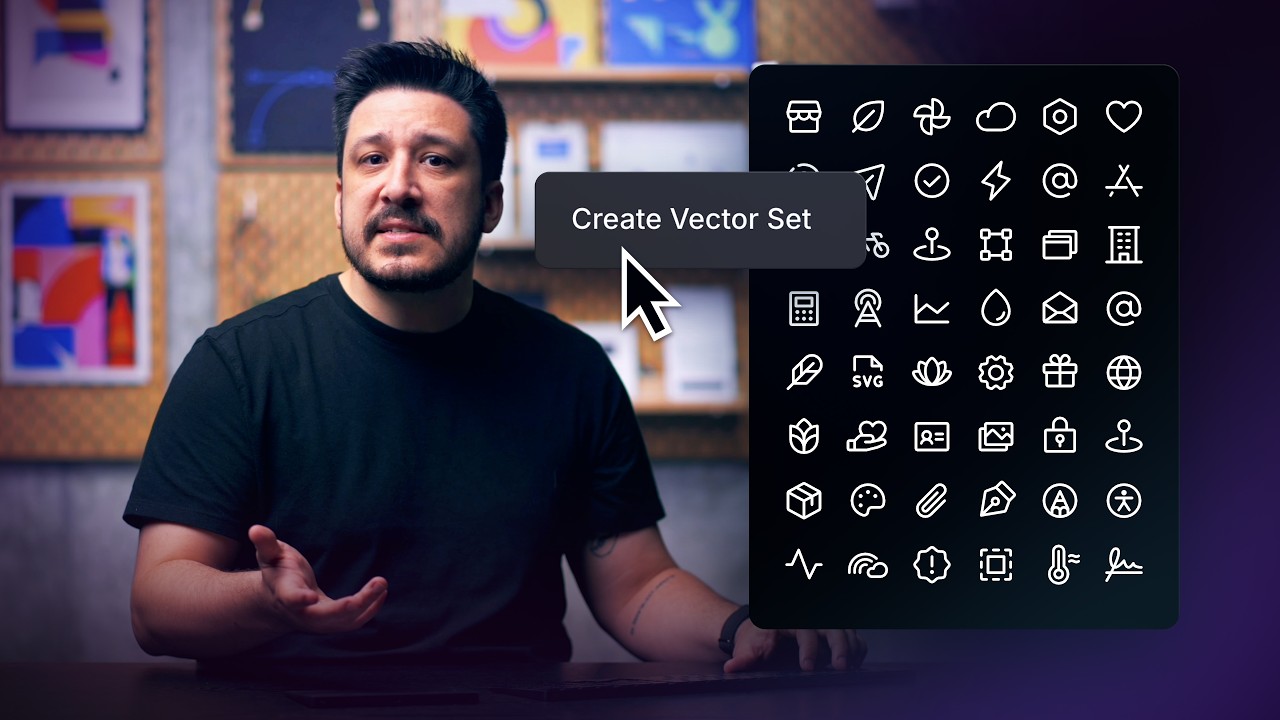
0:00As we've learned in the last chapter,0:02vector sets make it easy to organize and0:04reuse icons and illustrations [music]0:06across projects. But when we connect0:09them to our CMS, they become even more0:12powerful, allowing them to change0:14dynamically [music]0:15along with our content. So, in this0:17lesson, we'll cover how to add our0:19vector sets to a CMS collection, link0:21them [music] to CMS pages using0:23variables, and swap them dynamically0:25with CMS driven layouts.0:30Now, before we get started, if you're0:32not already familiar with the Framer0:34CMS, we recommend checking out our0:36getting started with the Framer CMS0:38course over at framer.com/academy0:42to get up to speed before diving into0:44this lesson. With that in mind, let's0:47start by adding a vector set into the0:49CMS. Here, I've created a CMS collection0:53for a blog, and I want to add an icon to0:55each item. So to do that, we'll head to0:58the edit fields tab, then click the plus1:01icon in the top right corner of the1:03popup. Because we already have a vector1:06set within our project, the option to1:08add it as a field will appear. So I'll1:10go ahead and choose the vector set I1:12want to use. With the set added, we can1:15change the default icon by clicking the1:17icon field and choosing which icon we1:20want to start with. Now we can open each1:23item in the collection and assign the1:25appropriate icon for that entry. Once1:28the icons are set for each CMS item, we1:31can head over to the main blog page.1:34From here, we'll add a vector set to the1:36CMS list that displays our blog posts1:39just like we've done in a previous1:41lesson by dragging it directly in from1:44the assets panel onto the canvas. And1:47we'll see that because the icon has been1:49placed inside a CMS list, the icon is1:52rendered for each item in this list,1:54just like the other CMS-driven content1:57on the page. However, since it's not2:00linked to our CMS collection yet, it's2:03only going to show the default icon from2:05the vector set, not the icons that I2:08assigned to each CMS item. So with the2:11icon selected, we'll head over to the2:13vector set properties. Click icon, then2:16set a variable, and choose the vector2:19set field we created earlier to connect2:22this to our CMS.2:24As soon as we do that, the icons will2:27switch to the ones set within the CMS.2:31The nice thing is that any variables2:33we've already set up within the vector2:35set like color or stroke width still2:38work even though the icons are coming2:41from the CMS. And if you want even more2:45flexibility, you can use additional CMS2:48fields to drive those variables like2:50controlling icon color through a color2:52field as well as other visual2:54properties. Okay, so now that our vector2:58set is connected to the CMS, the icons3:01are driven entirely by the content. If3:04we ever want to change an icon, we'll3:06just head back to the CMS collection,3:08change it within the CMS item, and it3:10will automatically reflect the change on3:13our page. It's really that simple to3:15connect our vector sets to [music] our3:17CMS, allowing us to increase their3:19scalability across blog pages, dynamic3:22lists, change logs, and many [music]3:24other use cases. In the next lesson,3:27we'll look at how to take our vector3:28sets and share them across multiple3:30projects. [music] See you there.

Watch on YouTube ↗

More in this topic

8 Framer shortcuts you're probably sleeping on4:19
8 Framer shortcuts you're probably sleeping on
Layout & Design3K views · 2 months ago
Framer Update: Stack Sorting and Bento Grids2:16
Framer Update: Stack Sorting and Bento Grids
Framer Update7K views · 2 months ago
Sharing Vector Sets Across Projects (Vectors Lesson 7)3:41
Sharing Vector Sets Across Projects (Vectors Lesson 7)
Layout & Design1K views · 3 months ago
Animating Vectors in Framer (Vectors Lesson 5)4:25
Animating Vectors in Framer (Vectors Lesson 5)
Layout & Design4K views · 3 months ago
Customizing Vectors with Variables in Framer (Vectors Lesson 4)4:59
Customizing Vectors with Variables in Framer (Vectors Lesson 4)
Layout & Design3K views · 3 months ago
Replace component instances site-wide in Framer1:39
Replace component instances site-wide in Framer
Layout & Design4K views · 4 months ago
Creating and Organizing Vector Sets in Framer (Vectors Lesson 3)6:58
Creating and Organizing Vector Sets in Framer (Vectors Lesson 3)
Layout & Design3K views · 4 months ago
Creating a fixed footer reveal in Framer6:25
Creating a fixed footer reveal in Framer
Layout & Design7K views · 4 months ago

Create a free website with Framer, the website builder loved by startups, designers and agencies.